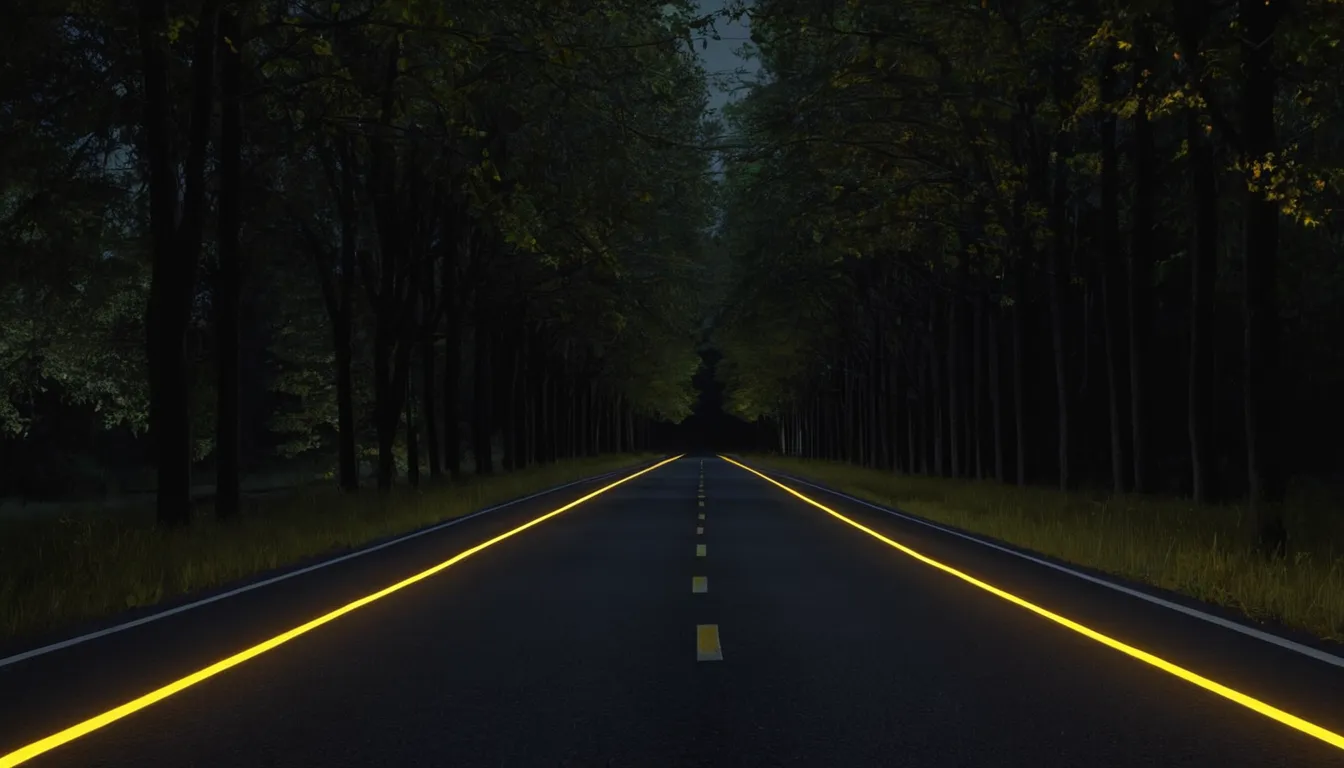
Why night driving is harder
At night your eyes have far less light to work with. Colors fade, edges blur, and it's harder to judge how fast other vehicles are moving. Glare from oncoming headlights can leave you briefly unable to see after they pass. Eyesight for low light also tends to get weaker with age, so many people notice night driving getting harder in their forties and fifties. Add fatigue, which is more common after dark, and it's easy to see why night driving needs extra care.
Don't outdrive your headlights
Your low beams light only a limited stretch of road ahead. If you're going fast enough that you couldn't stop within that stretch, anything dark in the road will appear too late. On unlit roads, slow down enough that you could stop within the distance you can clearly see. Leave a bigger gap behind other vehicles too. The gap ladder suggests four or five seconds at night.
High beams and low beams
Use high beams on dark roads when no one is ahead of you or coming toward you. They light much more of the road. Switch to low beams when you meet oncoming traffic or come up behind another car. Many state handbooks say to dim within about 500 feet of an oncoming vehicle and about 300 feet when following, so check the rule in your state.
In fog, rain or snow, high beams usually make things worse. The light bounces back off the water droplets and creates a bright wall in front of you. Stay on low beams.
Dealing with glare
- When an oncoming car's lights are bright, look toward the right edge of your lane and use the lane line to steer until it passes.
- Flip your rear-view mirror to its night setting, or use the auto-dimming mirror if your car has one.
- Turn the dashboard and screen brightness down. A bright display makes it harder for your eyes to adjust to the dark road.
- Avoid tinted glasses at night. They cut the light you need.
Clean glass and aimed lights
A film on the inside of the windshield scatters light and makes glare much worse. Clean the glass inside and out, and wipe the headlight lenses too. Cloudy or yellowed headlight covers can cut the light reaching the road. If your lights seem dim or point too low or too high, have the aim checked. Replace burned-out bulbs promptly, and check that both headlights work, since one light can make a car look like a motorcycle to other drivers.
What to watch for
- Pedestrians and cyclists. Dark clothing can be nearly invisible until you're close. Slow down near crosswalks, bus stops and bars at closing time.
- Animals. Deer and other wildlife are most active around dusk and dawn. Watch for eyes shining at the road edge. If one crosses, expect others to follow.
- Impaired and tired drivers. They're more common late at night. Give any car that drifts or brakes oddly plenty of room.
Look after yourself
If you notice you're struggling with glare or can't see well at night, mention it at your next eye exam. Night vision problems can have causes worth checking. On long drives after dark, plan breaks and watch for the signs of fatigue covered in drowsy driving.